
BBDEX
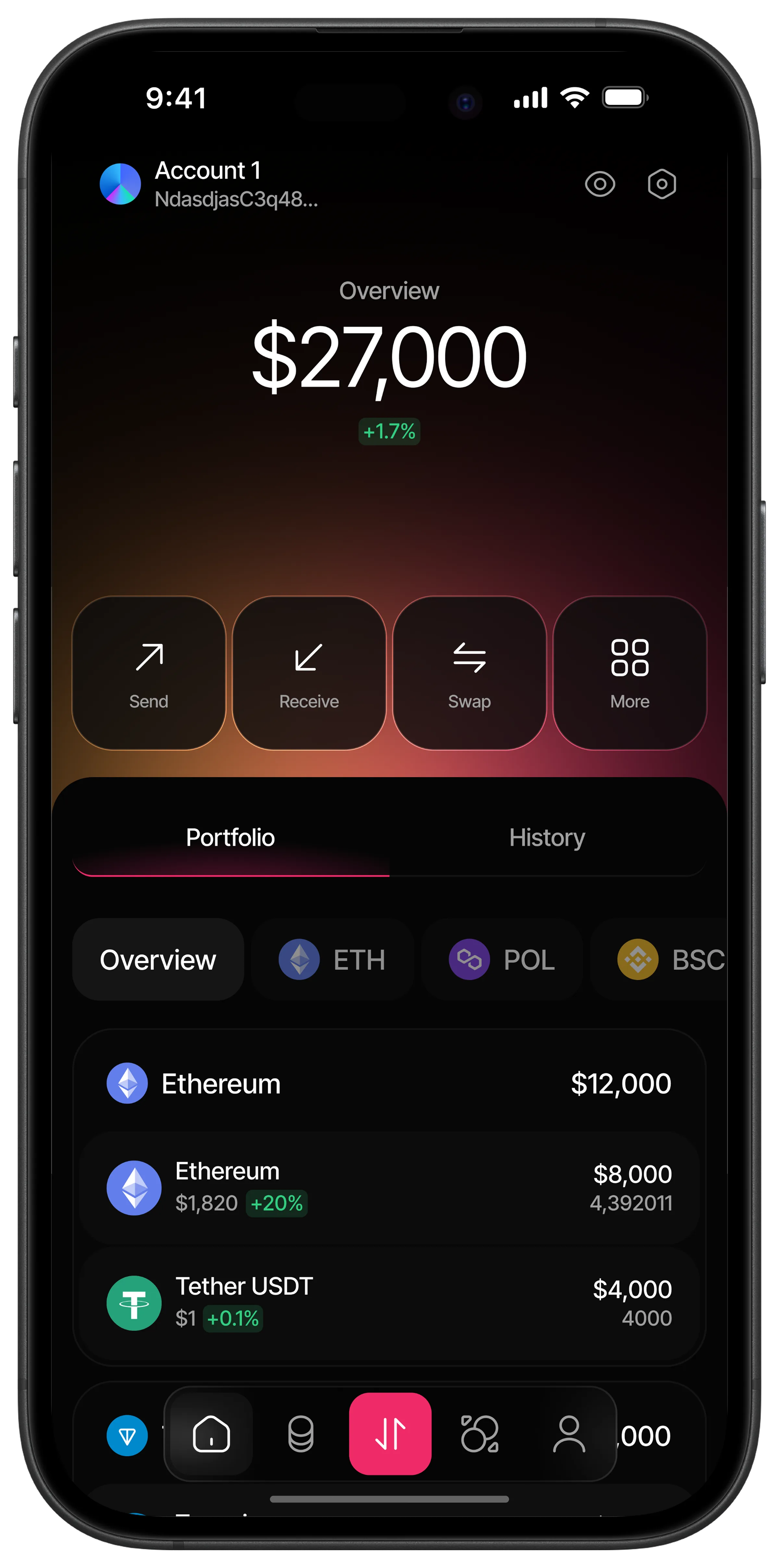
Making a 120-screen crypto ecosystem behave like one product.
- Product
- Multi-chain crypto ecosystem
- Scope
- 120+ screens and a scalable design system
- Surface
- Mobile and web
- My role
- Senior Product Designer, concept to developer handoff
Context
BBDEX is a multi-chain crypto ecosystem built on a simple premise: a powerful blockchain product should not feel complicated. Wallet management, trading, NFTs, AI-assisted features and account management live in one experience rather than in five that happen to share a logo.
Five products wearing one name
A wallet, an exchange, an NFT surface, an AI layer and account management each come with their own conventions. Assembled without a shared model they produce a product where the same gesture means something different depending on which section you are in, and where every screen has to be learned separately.
Crypto interfaces make this worse by treating density as credibility. Balances, networks, assets, market movement, history and transaction tools all compete for the same attention, so a newcomer has to decode the product before they can use it.
The brief was explicitly for everyday users, which meant the complexity could not simply be hidden. It had to be ordered.
Order the complexity instead of removing it
Value comes first. The balance establishes orientation and the primary actions sit directly beneath it, so the answer to what do I have and the answer to what can I do about it never live on different screens.
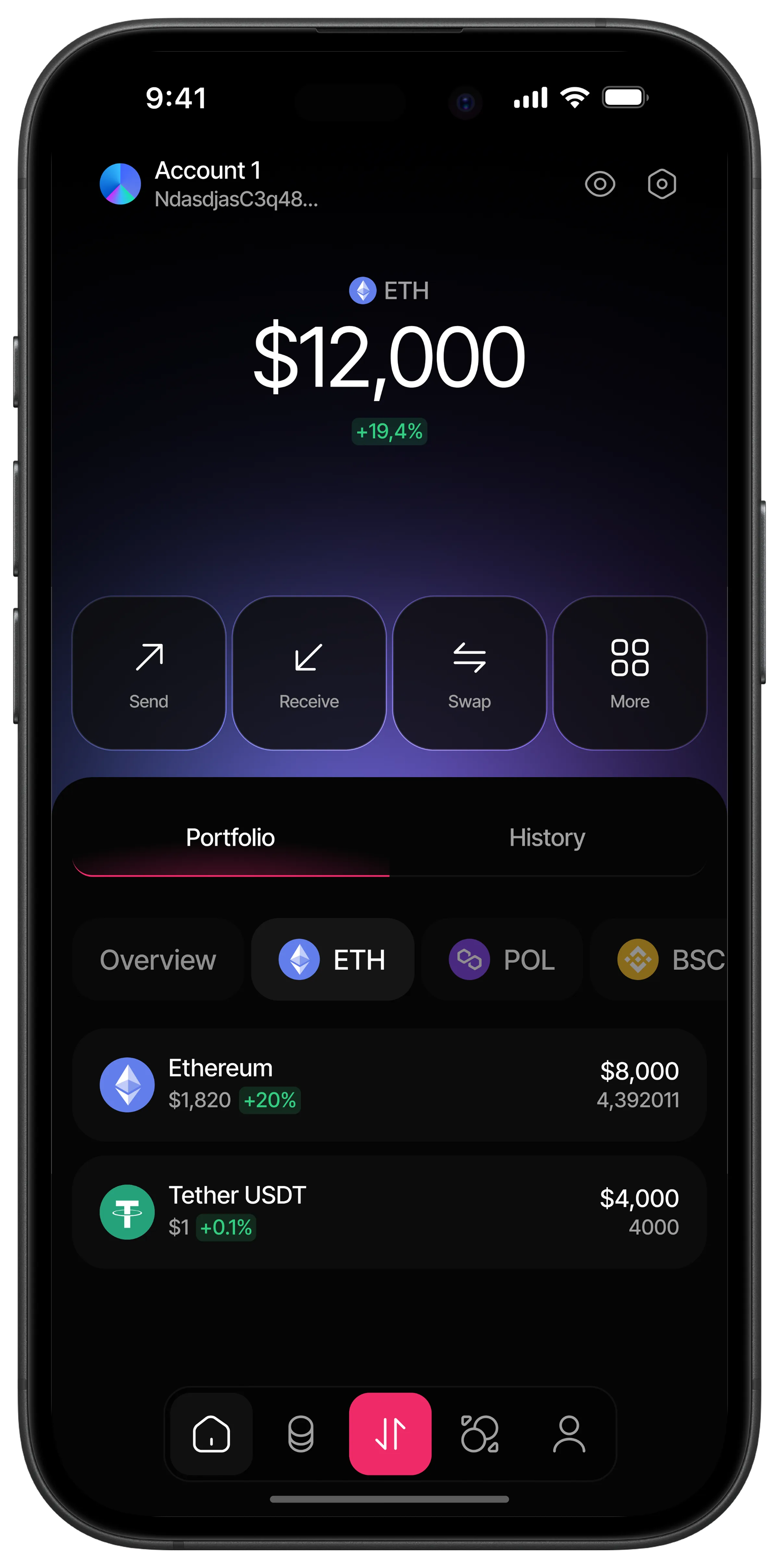
Navigation moves in one predictable direction: total portfolio, then network, then individual asset. Each step narrows the frame without changing the rules, which is what lets a user go three levels deep and still know how to get back.
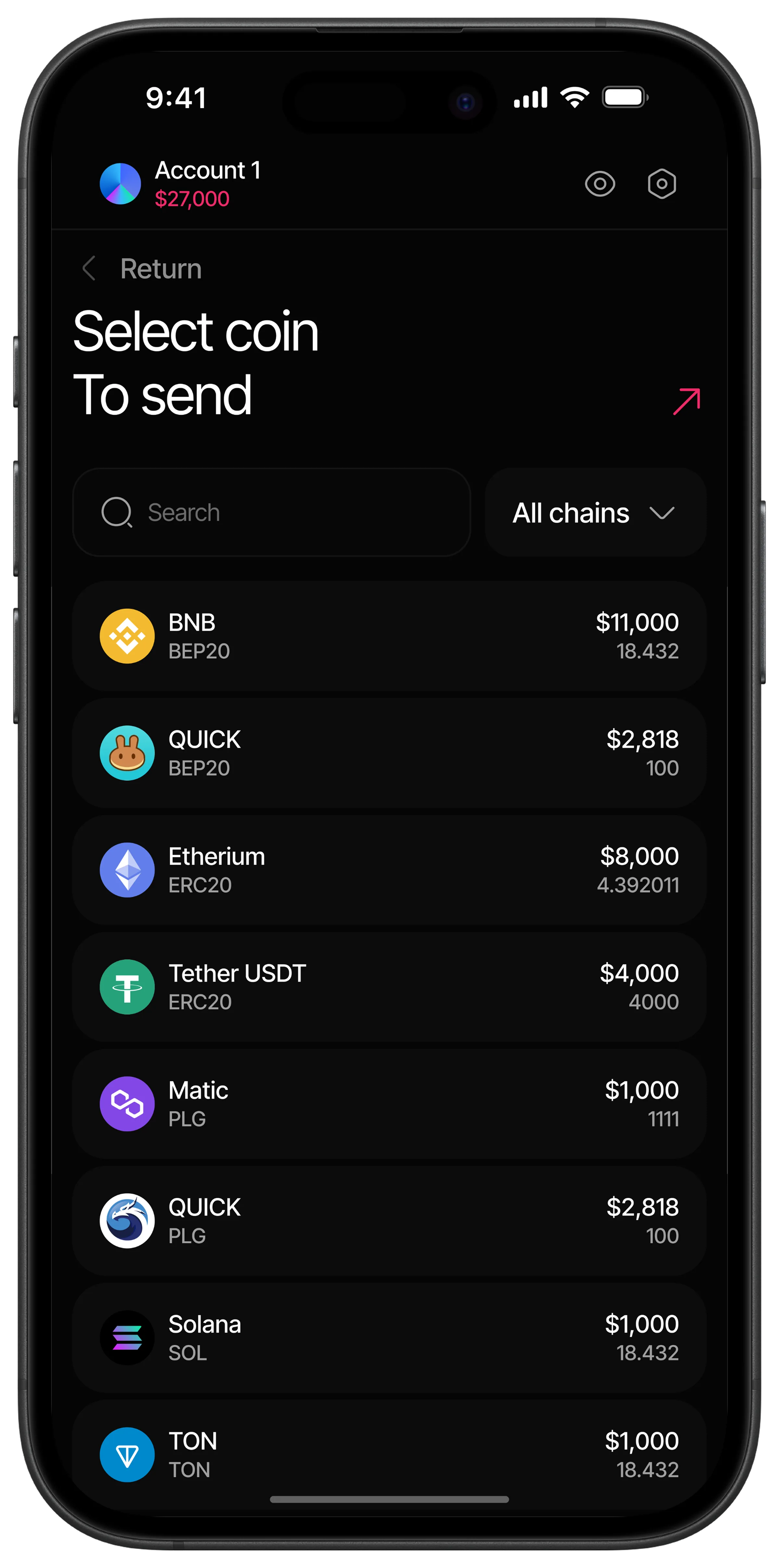
Repeated objects carry the weight. A token row keeps identity, value, supporting data and price movement in fixed positions everywhere it appears, so comparison is visual rather than analytical. Across 120 screens that consistency is the product, not a finishing touch.
My approach
Define the shared model first
Establish how balance, network, asset, transaction and account relate across the whole ecosystem before designing any individual surface.
Prioritise the wallet jobs
Place balance checking and primary transactions ahead of settings, history and asset management in every hierarchy.
Standardise the repeated objects
Fix the anatomy of token rows, transaction states and asset cards so they read identically in the wallet, the exchange and the NFT surface.
Build the system for handoff
Document components, states and interaction patterns so 120 screens could be built consistently by a team that did not attend the design conversations.
Design for recognition on dark
Use restrained colour and familiar transaction symbols so the dark surface stays legible at a glance rather than relying on saturation to signal meaning.
One mental model across the whole ecosystem
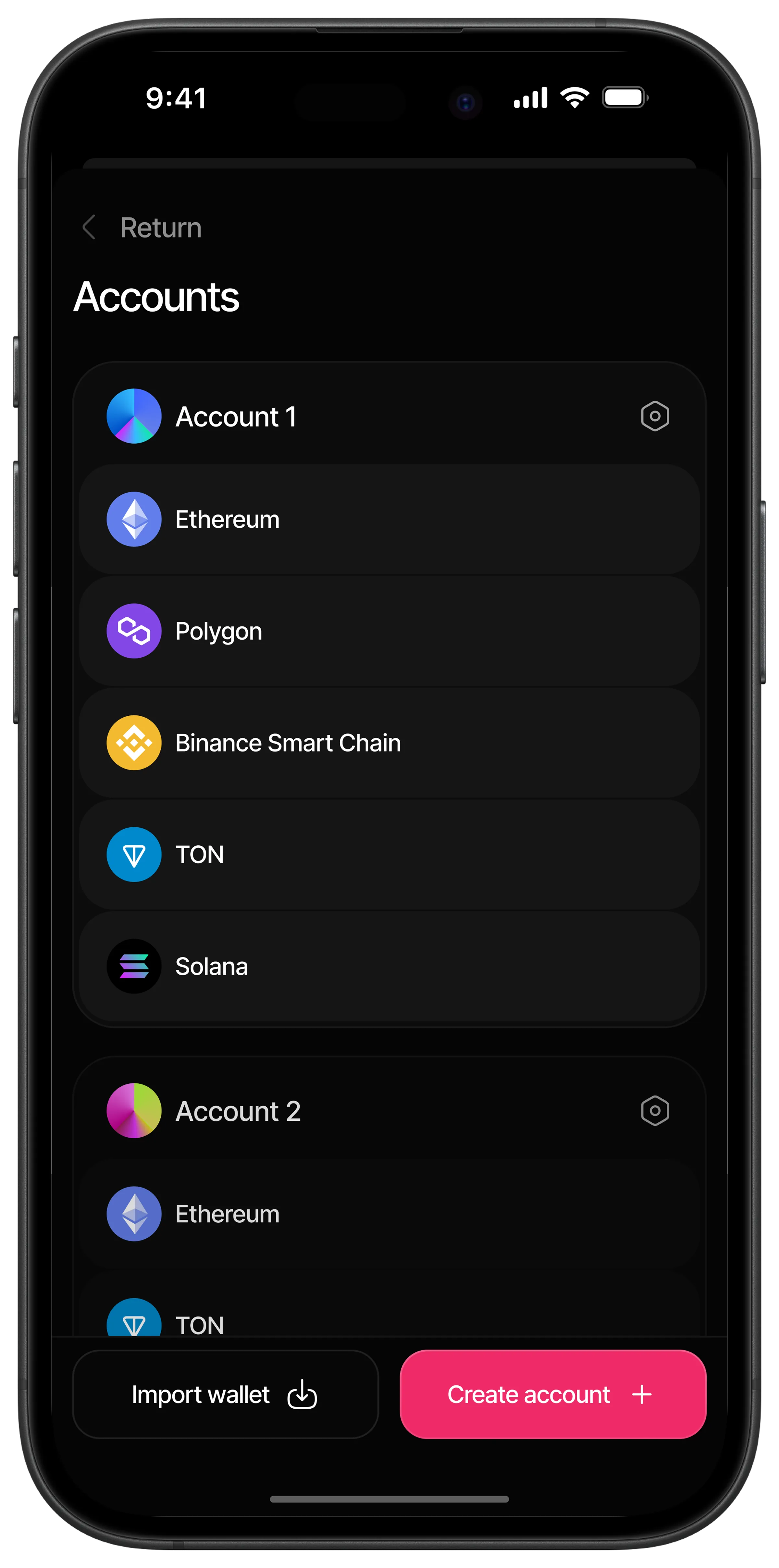
Portfolio value, core transactions, asset detail, NFTs and account management sit inside one continuous hierarchy. A user can move from an overview to a specific asset on a specific chain without losing the relationship between what they hold and what they can do with it.
The design system is the part that scales. Interaction patterns defined once carry through every new surface, so growth adds screens without adding new things to learn.
The same problem of keeping a serious tool legible runs through Gettran, where market data had to sit under a collectible without flattening it. On the question of who a product is actually for, nobody hires a persona covers how I get to that answer, and onboarding starts long before the app opens covers what a first session has to carry.
- Over 120 screens designed from concept to developer handoff
- One shared model across wallet, trading, NFTs, AI and accounts
- Primary transaction actions anchored to the balance that gives them context
- A component system built to be implemented without the designer in the room
Reflection
A useful crypto product does not remove complexity, because the complexity is the value. It gives every layer of it a stable place and a clear reason to be there.